
Lincoln County Court Records After Arrest
After a Lincoln County arrest, the jail roster and the court file answer different questions. The roster can show whether WVDCR has a person in regional jail custody at Western Regional Jail. The court record shows the legal case: complaint, case number, charges filed in Magistrate Court or Circuit Court, hearing dates, orders, bond, fines, dispositions, and later case events.
The path usually runs from arrest to booking, then to initial appearance, prosecutor review, and case filing. West Virginia uses county prosecuting attorneys rather than district attorneys. The official Lincoln County page identifies Jeff Bowen as Prosecuting Attorney and Jennifer Anderson as Assistant Prosecuting Attorney. West Virginia Code Chapter 7, Article 4 gives the prosecutor responsibility for criminal business of the state in the county.
Custody and booking details belong on the Lincoln County jail inmate records page. Booking photos are handled separately on the Lincoln County jail mugshots page. The court record is the formal case track after the arrest.
Find Lincoln County Court Records After Arrest
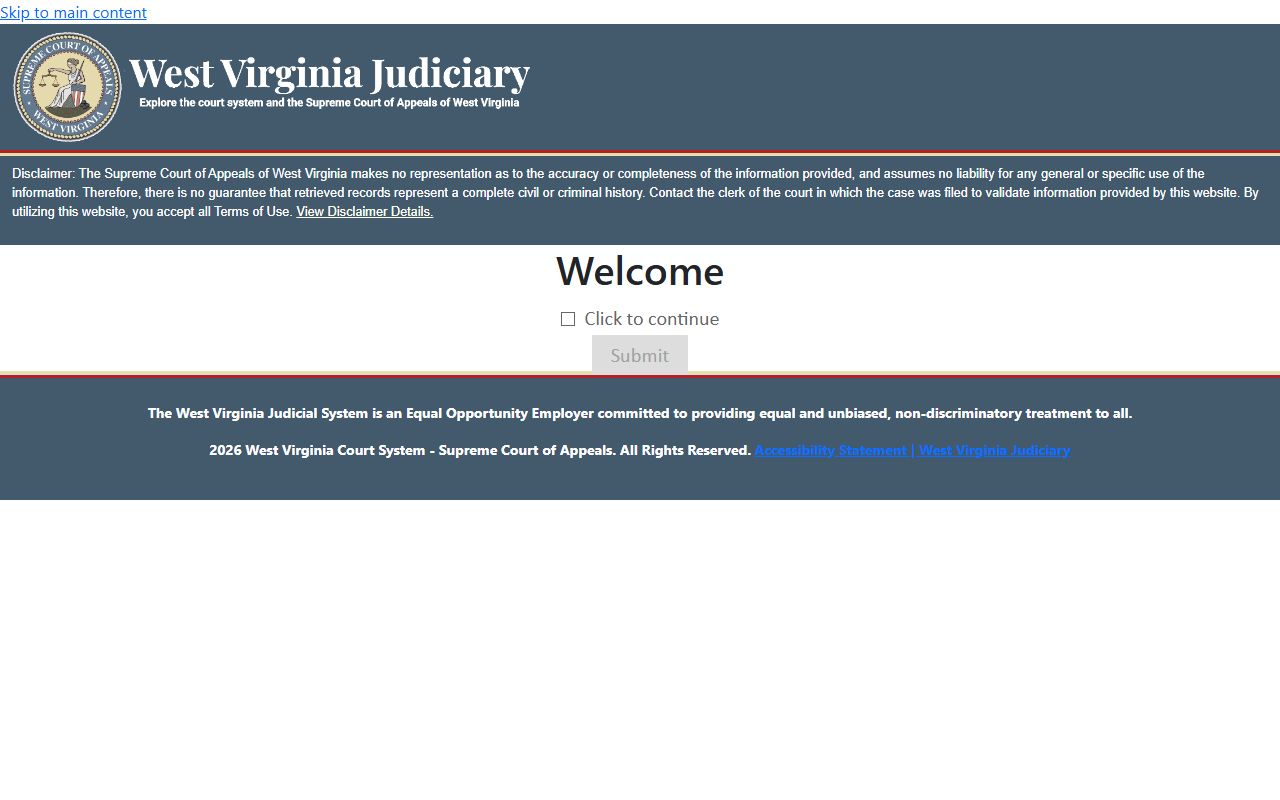
The first online court route is the West Virginia Judiciary's Magistrate Record Search explainer and the Magistrate Case Record Search portal. The Judiciary says users may search by first name, last name, or case number, and that the search returns up to 30 records. The entry screen uses a continue gate before the search form.
| Field Label | Type | Required | Notes |
|---|---|---|---|
| First name | Text | One search option | Can be used with a last name when the name is known. |
| Last name | Text | One search option | Use spelling variants when the roster name and court name differ. |
| Case number | Text | One search option | Best when the number is on a citation, bond paper, or clerk notice. |
| Click to continue | Gate | Yes on entry | The entry page requires a click and submit before searching. |
The official Magistrate Case Record Search entry can be visually confirmed through the captured portal screenshot.
Arrest to Lincoln County Court Case
The court-record path starts when a complaint, warrant, or charging paper is filed. West Virginia Code §62-1-5 addresses complaint procedure after an arrest. Misdemeanor cases and preliminary felony steps often begin in Magistrate Court. Felony cases may later move to Circuit Court through indictment, information, or other felony procedure.
- Arrest or warrant service by the sheriff, police, state police, or another agency.
- Booking and custody at Western Regional Jail when the person is detained.
- Initial appearance before a magistrate or judicial officer.
- Complaint or warrant paperwork filed in the court record.
- Prosecutor review, possible amendment, dismissal, reduction, or felony transfer.
- Disposition, plea, dismissal, verdict, sentencing, or later expungement action.
Once the case moves into Circuit Court, the official public access route is WVPASS. Command-line inspection of WVPASS returned loading or error text during research, so the Circuit Clerk remains important for copies and older cases.
Charging Documents After Lincoln County Arrest
Formal charges can differ from the booking label. A roster entry may use a short arrest phrase, while the court record uses the complaint, information, or indictment. That difference is common and does not mean the court record is wrong. The court file is the source for the charge that was filed, changed, reduced, dismissed, or proved.
| Document | Who uses it | What it does |
|---|---|---|
| Complaint | Officer or prosecutor under court rules | Starts many magistrate-level criminal cases or preliminary felony steps. |
| Information | Prosecuting attorney | Can set out formal charges without a grand-jury indictment when legally allowed. |
| Indictment | Grand jury process | Formal felony charging document for cases sent to Circuit Court. |
The Lincoln County Circuit Clerk page says the office files court orders and other case records into permanent record books and tracks enforcement of orders, fines, penalties, judgments, and verdicts. It also states records date back to about 1920 after the courthouse burned.
Lincoln County Charge Status
Court records after a jail arrest should be read by status, not by the first charge label alone. A charge can be pending at the first appearance, amended after prosecutor review, reduced through plea negotiation, dismissed, sent to Circuit Court, or resolved by conviction or acquittal. The status tells more than the roster wording.
| Status | What It Means |
|---|---|
| Pending | The charge remains open and awaits hearing, plea, dismissal, or transfer. |
| Amended or reduced | The filed charge changed after review, plea, or court order. |
| Dismissed | The court ended the charge without conviction, subject to the terms in the order. |
| Bound over or transferred | A felony matter moved beyond magistrate preliminary steps toward Circuit Court. |
| Convicted | A plea or finding of guilt was entered by the court. |
Bond Records After Lincoln County Arrest
Bond is part of the court file because a judge or magistrate sets release conditions. West Virginia Code §62-1C-1a governs pretrial release conditions. §62-1C-2 defines bail as security for appearance, and §62-1C-4 addresses recognizance and surety requirements.
| Bond type | How it works |
|---|---|
| Own recognizance | Release based on a signed promise to appear, when the court allows it. |
| Cash bond | Money deposited as bail security for appearance. |
| Surety bond | A surety or bondsman backs the person's appearance obligation. |
| No-bond hold | Release is not available until another court or agency clears the hold. |
Lincoln County Magistrate Clerk Lori A. Whitten is listed at the Lincoln County Courthouse, PO Box 573, 8000 Court Avenue, Hamlin, WV 25523, with phone (304) 824-7999 ext. 235. Bond details should be confirmed with the issuing court and jail before payment.
Warrants and Lincoln County Arrest Records
No official Lincoln County Sheriff's Office active-warrant search or most-wanted list was located on the county site. That means warrant research should use official fallbacks. Call the sheriff's office for law-enforcement routing, call the Magistrate Clerk for court-originated warrants or bench warrants, and check court records for case events. A served warrant can later produce a booking at Western Regional Jail.
- Arrest warrant
- A court order based on probable cause for a new charge.
- Bench warrant or capias
- A court order tied to failure to appear, violation, or another court matter.
- Detainer
- A hold from another agency that can keep a person in custody even after local bond is posted.
Charges vs Convictions
An arrest and charge are not the same as a conviction. The jail roster may show why the person was booked. The court record shows what charge was filed and whether that charge led to dismissal, plea, trial, conviction, acquittal, or another disposition. Employers, landlords, licensing boards, and other regulated users must not treat informal web lookup results as a consumer report.
| Charge | Conviction | |
|---|---|---|
| Stage | Accusation filed in court | Guilty plea, verdict, or finding |
| Proof level | Depends on procedural stage | Resolved under criminal-case standards |
| Where verified | Magistrate or Circuit Court file | Final court disposition and sentencing record |
Sealed and Expunged Court Records
West Virginia law provides expungement routes for some records, but eligibility depends on the case outcome and statute. West Virginia Code §61-11-25 addresses expungement for acquittals and dismissed charges, subject to exceptions. §61-11-26 addresses expungement of certain convictions.
| Sealed | Expunged | |
|---|---|---|
| Public access | Hidden or restricted from ordinary public view. | Removed under the court's expungement order. |
| Authority | Court order or rule controls access. | Statutory expungement process controls relief. |
| Practical step | Ask the clerk or an attorney about the order. | Review eligibility under West Virginia law and court procedure. |
Important: A dismissed charge is not automatically gone from every public index; verify the case status with the clerk.